


1960

1948
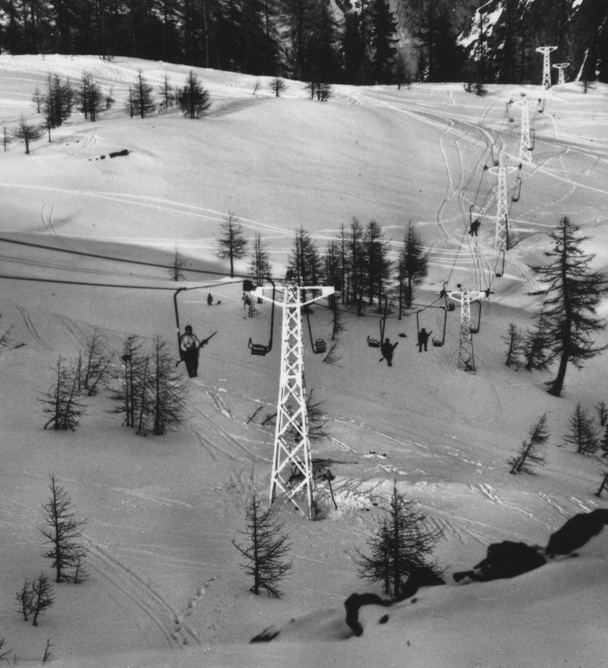
A group of forward-thinking pioneers from La Thuile decided, in the immediate post-war period, to invest in an emerging new sector: mountain tourism.
And so it was that in the Cogne cinema hall in the Villaret district, on 8 May 1948 at 4:00 p.m., the Funivie Piccolo San Bernardo joint-stock company was founded, paving the way for one of Italy's most important ski resorts.
That same year, the first single-seater chairlift was inaugurated, connecting the village of La Thuile with the hamlet of Les Suches; the ride lasted 25 minutes.
Shortly after, the second section was also opened, linking Les Suches to Chaz Dura — again a single-seater, with a travel time of 20 minutes.
1960
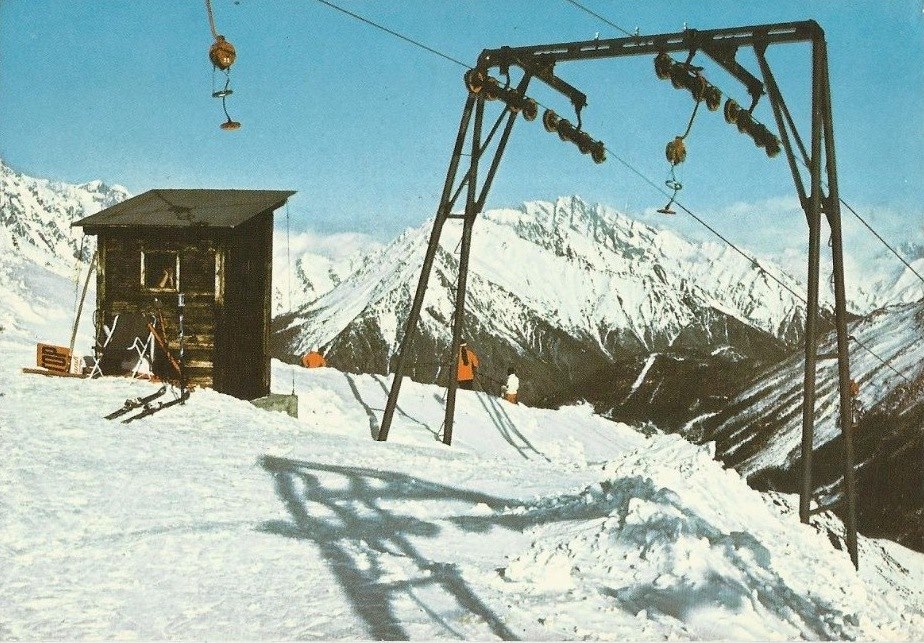
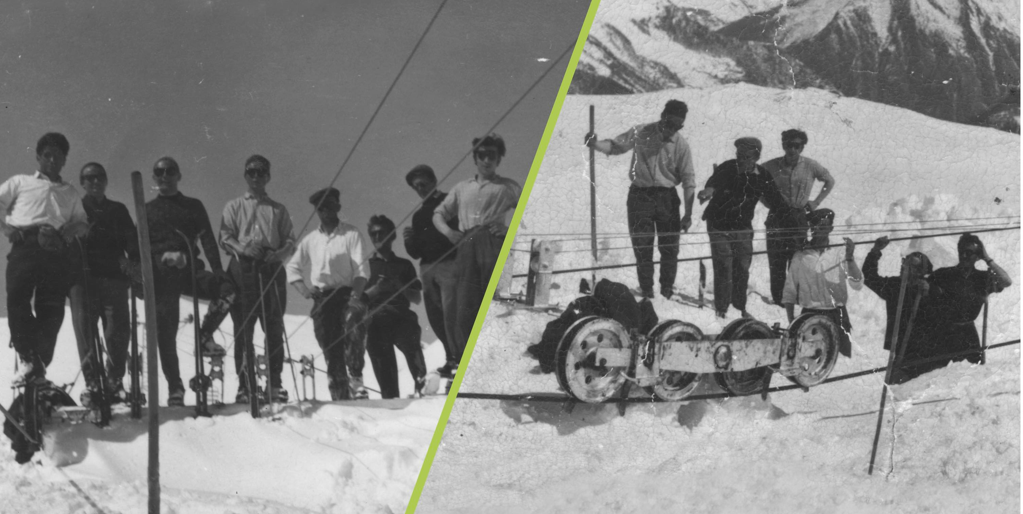
Interest arrived from several investors, both Italian and foreign, who wanted to bet on the development of the resort's ski infrastructure through its cable systems.
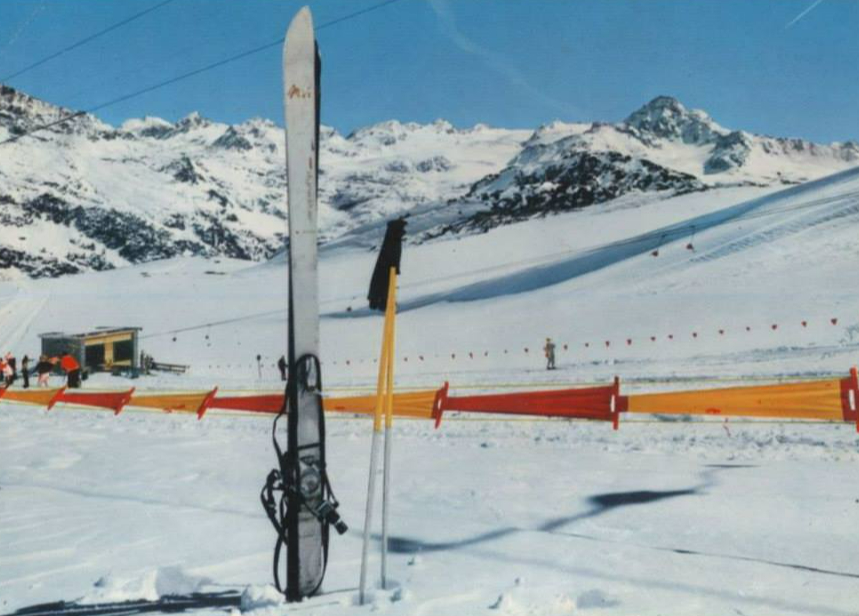
The first proposed change was to replace the single-seater Les Suches – Chaz Dura, with its operational challenges, with ski tows that were becoming increasingly popular in ski resorts.
1967
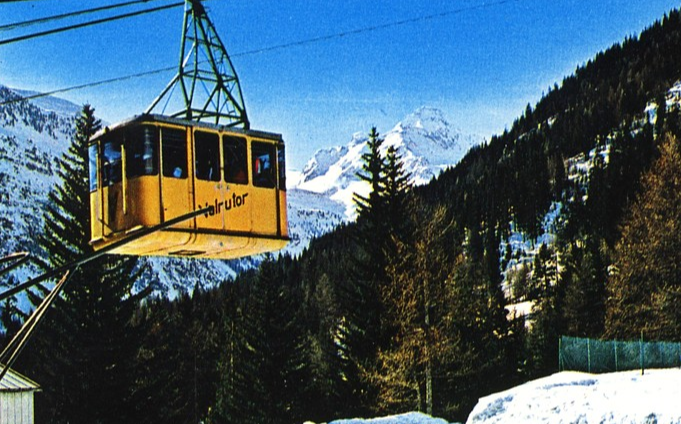
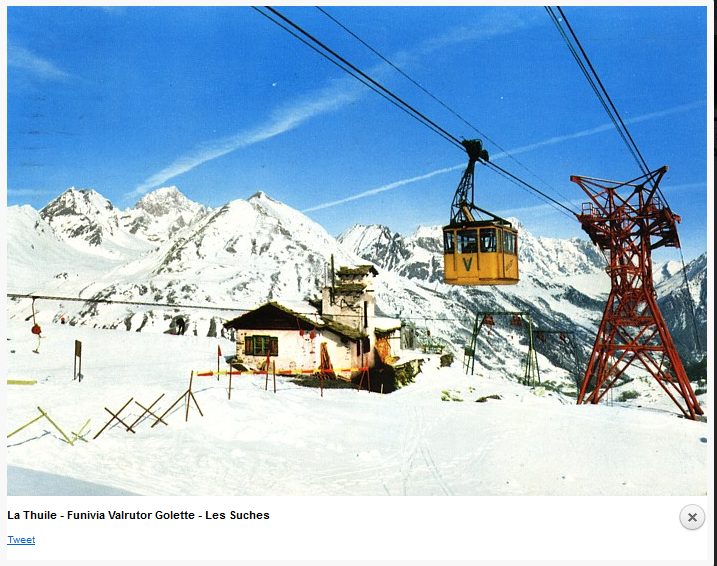
Then came the moment to transform the La Thuile – Les Suches chairlift into a modern reversible cable car, with the design commissioned to Piemonte Funivie: thus the Valrutor project was born, which was inaugurated on 22 December 1967.
With a capacity of 600 people per hour and a travel time of 12 minutes, it became the springboard for the entire ski area, attracting ever more skiers and tourists: this led to further investment in accommodation and services for visitors.
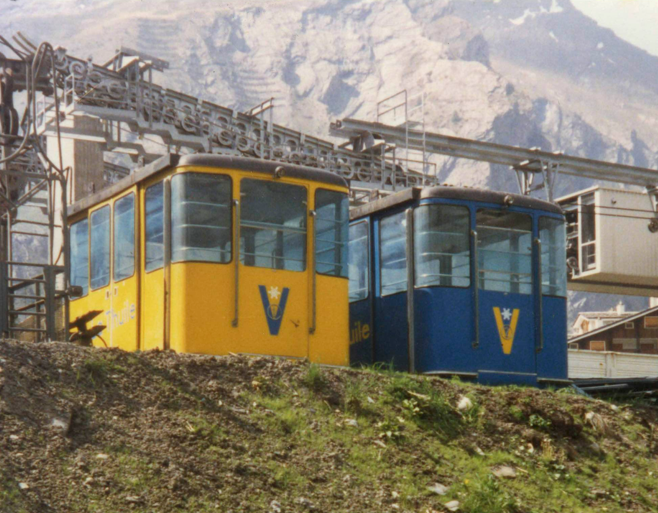
This cable car, cutting-edge for its time, with its two cabins — one yellow and one blue — became so iconic for La Thuile that it also inspired the name of the Funivie Piccolo San Bernardo information point, the Punto Giallo Blu (Yellow Blue Point).
THE 1970s
During these years, studies began for the increasingly ambitious development of the La Thuile ski area, launching the design process to create a connection with the nearby French resort of La Rosière.
In four years, revenues practically doubled, and in the early 1970s La Thuile was in continuous expansion.
Thanks precisely to the ever-growing number of skiers, the board of directors proposed doubling the ski tow leading up to Chaz Dura, and replacing the diesel engines with a connection to the electrical grid.
Further proposals also took shape for building additional lifts to expand the number of slopes and the catchment area of the ski resort.
These were the years of the summer skiing dream, on the Rutor or Miravidi glaciers. A project never brought to completion, and one that today would in any case be abandoned given the state of the glaciers.
4 January 1985
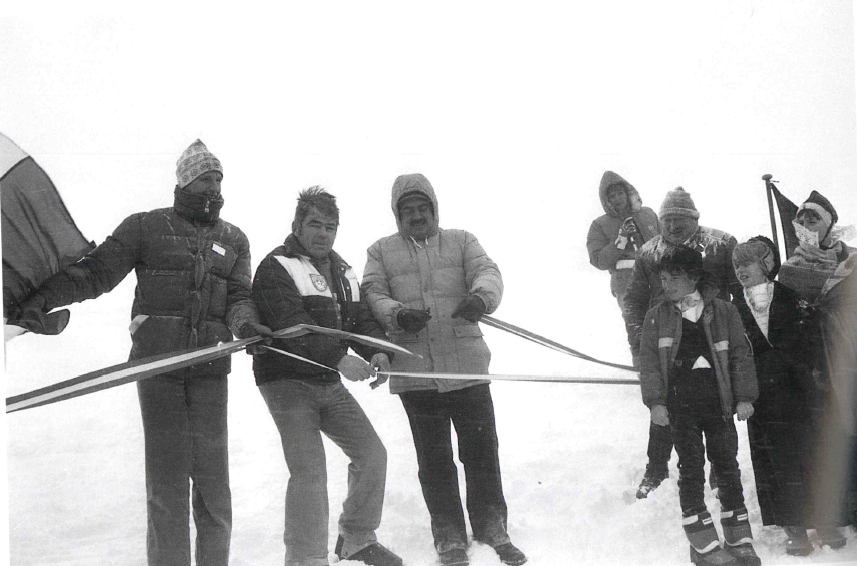
The project finally became a reality: adverse weather did not stand in the way of the official inauguration of the Italian-French connection (already opened on the previous 26 December to meet the needs of holidaymakers over Christmas).
1988
The Valrutor retires
After 20 years of distinguished service, the yellow and blue cabins retired for good, making way for a new cable car proportionate to the ever-growing tourist flows.
The DMC cable car, built by AGUDIO S.p.A., increased the hourly capacity from 600 to 3,000 people, with 25 cabins of 25 people each.
Fotogallery
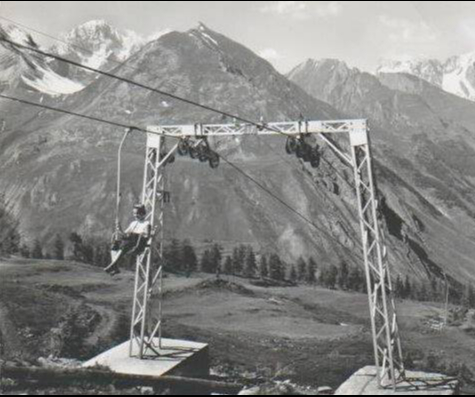
Monoposto in estate
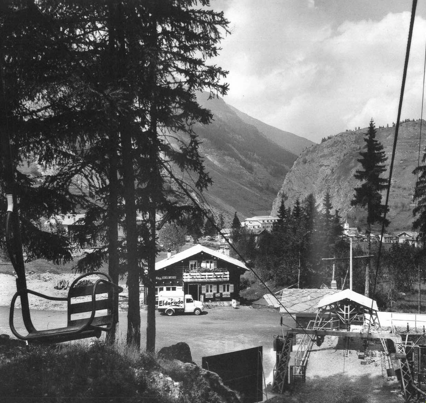
Partenza monoposto da La Thuile
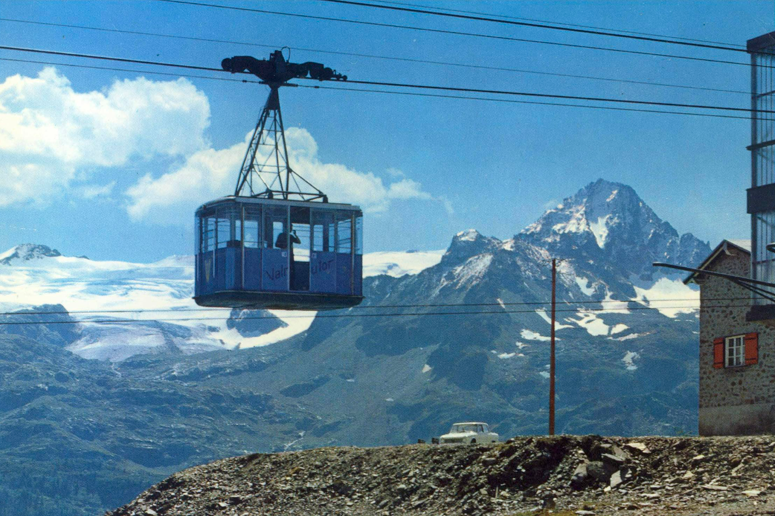
Cabina blu in arrivo a Les Suches
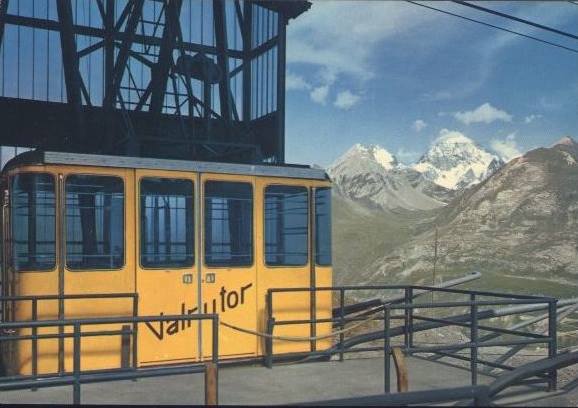
Cabina gialla in stazione a monte
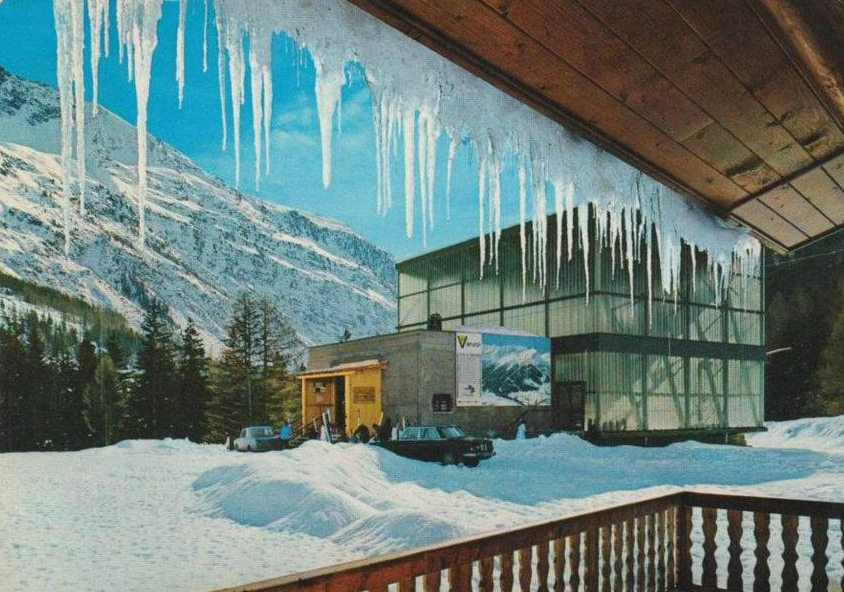
Partenza telecabina
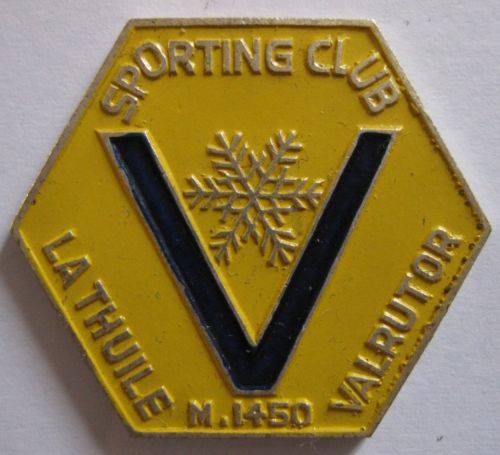
Medaglia sporting club Valrutor
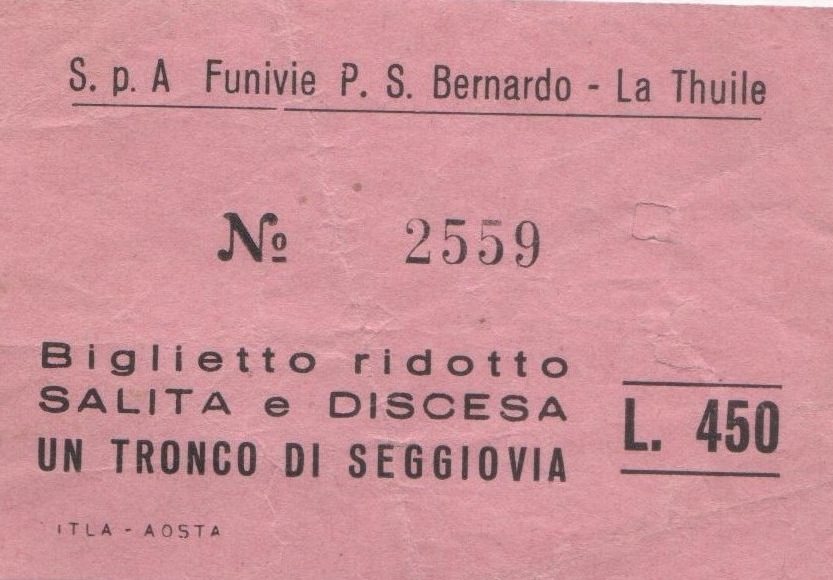
Biglietto storico
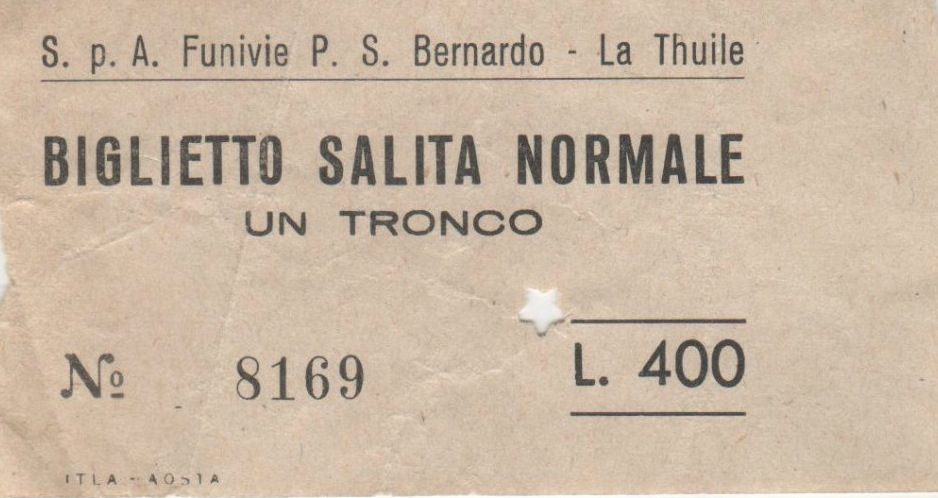
Biglietto storico
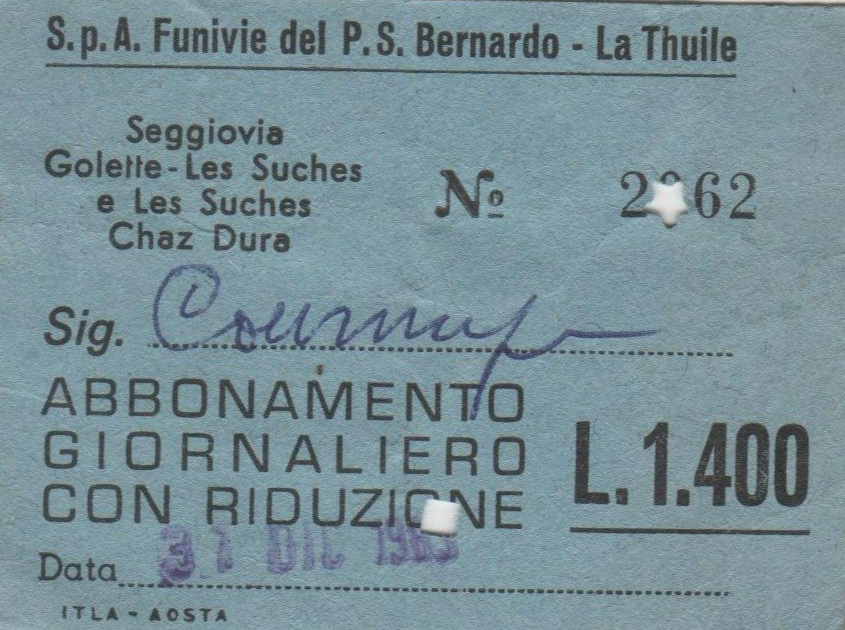
Biglietto storico
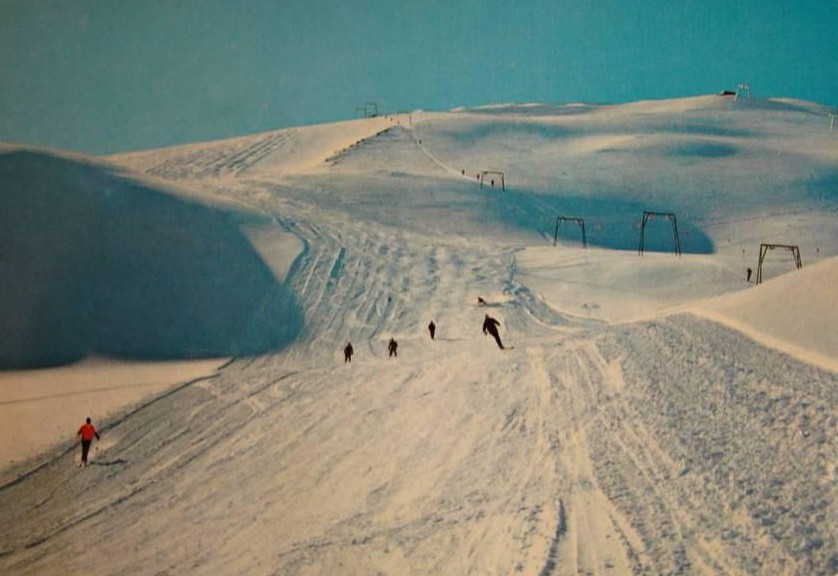
Pista 10
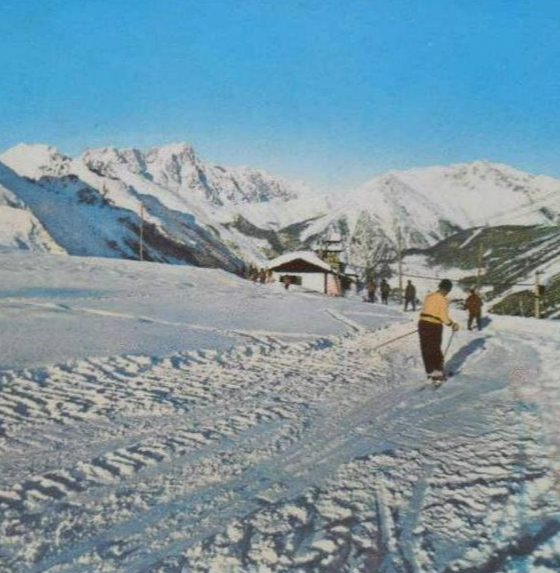
Pista 11
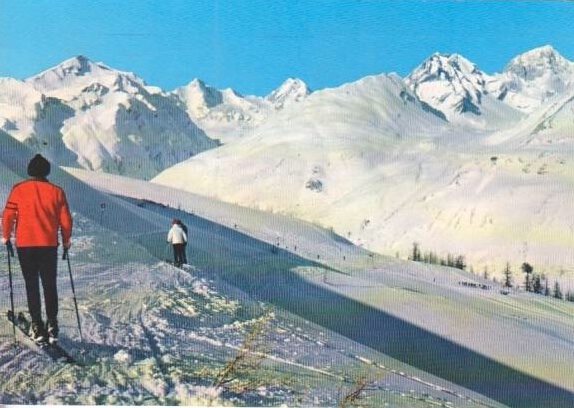
Pista "Piloni"
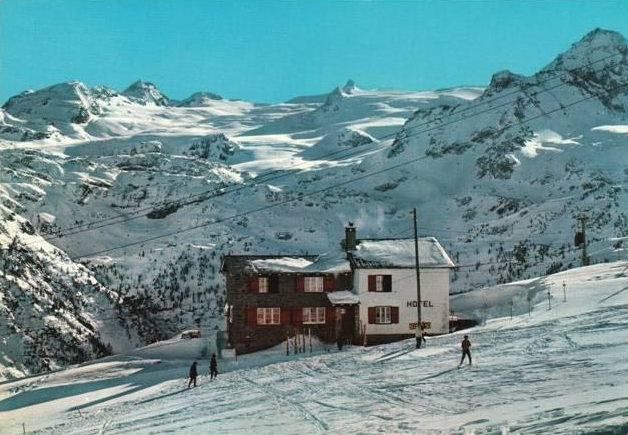
Hotel Glacier a Les Suches
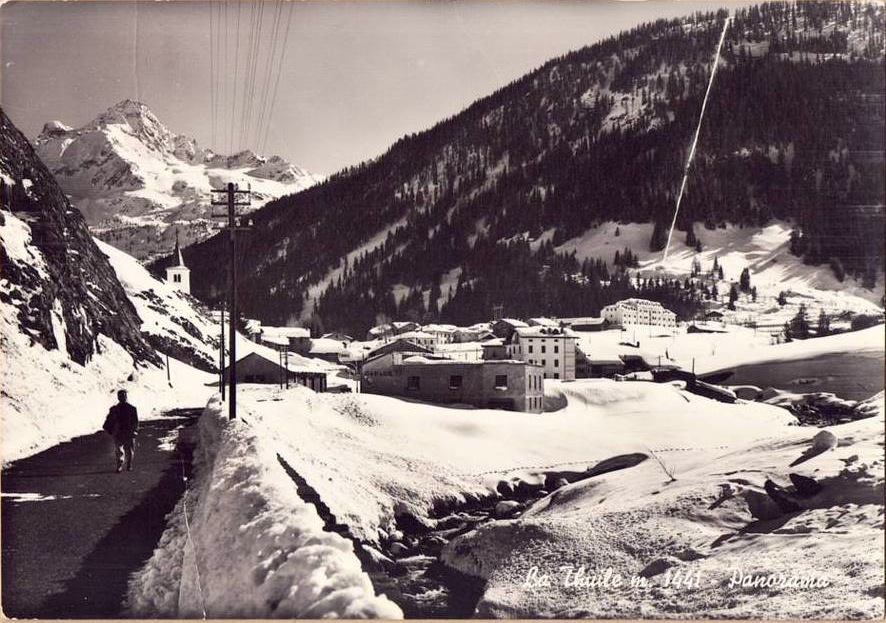
Ingresso del paese