La Thuile’s Ancient Mines
Hidden within the mountains lies a world, sometimes underground, sometimes visible, that tells the story of a time before La Thuile became the renowned ski destination we know today: the mines of La Thuile.
A precious resource, they are the legacy of a generous mountain that supported its people for centuries, allowing the extraction of argentiferous lead and anthracite for coal production. While some documents suggest mining activity as early as the 16th century, the first local coal mines date from the 19th century. It was, however, from the 1920s onwards that La Thuile truly developed into a mining centre, reaching its peak in the post-Second World War period.
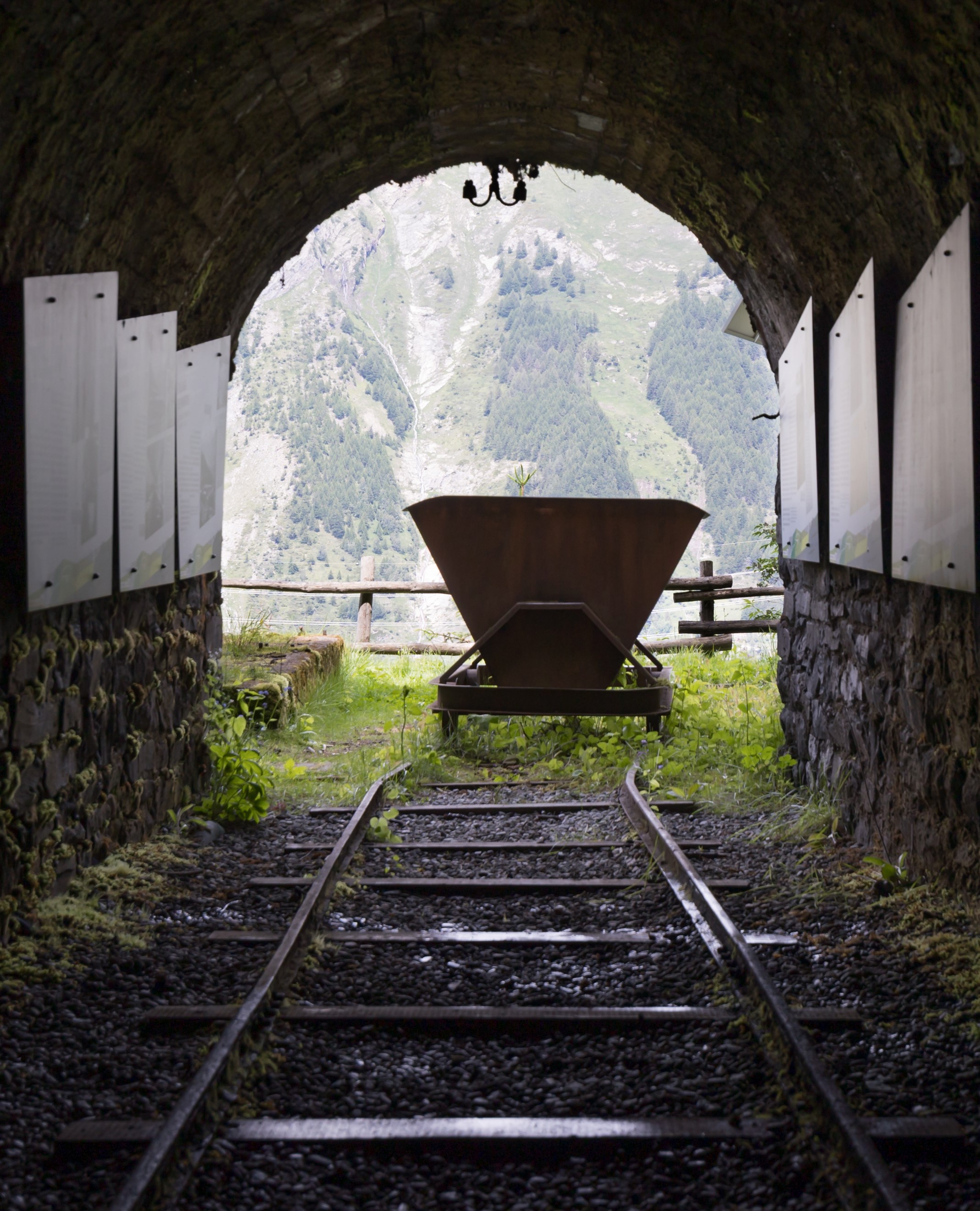
Beyond their historical significance, these underground worlds are now part of an experience that lets visitors explore traces of human activity without disturbing the mountain itself. Rails for carts, remnants of technical infrastructure, and segments of tunnels can still be spotted — even on a simple walk through the woods. A world seemingly out of time, now integrated into nature, which has reclaimed its space and transformed it into a kind of adventure park.
Discovering the Mines
These subterranean worlds can be explored independently on a short walk, or more fully on a guided excursion lasting nearly four hours.
The most fascinating route leads to the Granier Mine, where you can admire the gigantic winding engine once used to haul coal up an inclined plane from the lower levels. From there, the coal was sent to the starting station of the Arpy conveyances, transported by cableway to Morgex, processed, and finally delivered to the Cogne steelworks in Aosta.
In the area preceding the Granier tunnel, you can also see rails and carts used by miners to transport the extracted ore — all under the silent gaze of Mont Blanc, indifferent to the small marks humans sometimes leave on its slopes.